

Many growing businesses struggle with one common problem. Leads come in, but follow-ups don’t always happen on time. Some leads get lost. Some customers forgot after the first sale. This usually happens because businesses are not clear about the tools they need.
Two terms often create confusion here: Lead Management System and CRM. Many people assume they are the same. Some think they can use one instead of the other. In reality, both systems play different roles in the sales process.
A lead management system focuses on handling potential customers before a sale. A CRM goes beyond that and helps manage relationships even after the deal is closed. Knowing this difference is important, especially for businesses that want consistent growth and better customer experience.
In this blog, we will clearly explain how a Lead Management System and a CRM differ, where each fits in the sales journey, and how CRM like LionO360 brings the best of both into a single, simple platform.
What is a Lead?
A lead is any person or company that shows interest in your product or service. This interest can come in many ways, such as filling out a form on your website, calling your sales team, responding to an email campaign, or requesting a demo.
At this stage, the person is interested but has not yet become a paying customer.
What Is a Lead Management System?
A Lead Management System is designed to handle all activities that occur before a sale closes. The primary purpose of this system is to make sure that all leads are properly tracked and followed up on until they become customers. A Lead Management System helps sales teams manage leads and identify the most valuable ones.
Key Functions of a Lead Management System
A lead management system typically:
- Identifies & capture leads coming from various sources such as websites, emails, and campaigns
- Assigns leads to the appropriate salesperson
- Monitors lead activities and follow-ups
- Scores lead based on interest and behavior
- Enables sales teams move leads through the sales funnel faster
The focus here is very clear: convert interested prospects into customers efficiently.
What Is a CRM?
CRM stands for Customer Relationship Management. A CRM system manages not only leads but also accounts. CRM like LionO360 focuses on building long-term relationships rather than just closing deals.
CRM systems store detailed customer information and track every interaction a business has with a lead or customer.
What a CRM Typically Does
A CRM assists with the following:
- Managing leads and opportunities
- Monitoring emails, calls, meetings, and tasks
- Storing information in one location
- Evaluating the status of deals and sales pipelines
- Building relationships after the sale
Lead Management System vs CRM: The Main Difference
The easiest way to explain the difference is to look at what each is used for. A lead management system is primarily concerned with pre-sale functions, ensuring that no potential customer is overlooked. A CRM, by contrast, handles the whole process from initial contact to ongoing relationship.
| Lead Management System | CRM |
|---|---|
| Focuses on leads | Focuses on leads + customers |
| Short-term sales goal | Long-term relationship goal |
| Used mainly by sales | Used by sales, support & managers |
| Helps close deals | Helps grow customer lifetime value |
In simple terms, lead management is a part of CRM, but CRM goes much further.
How LionO360 CRM Combines Both
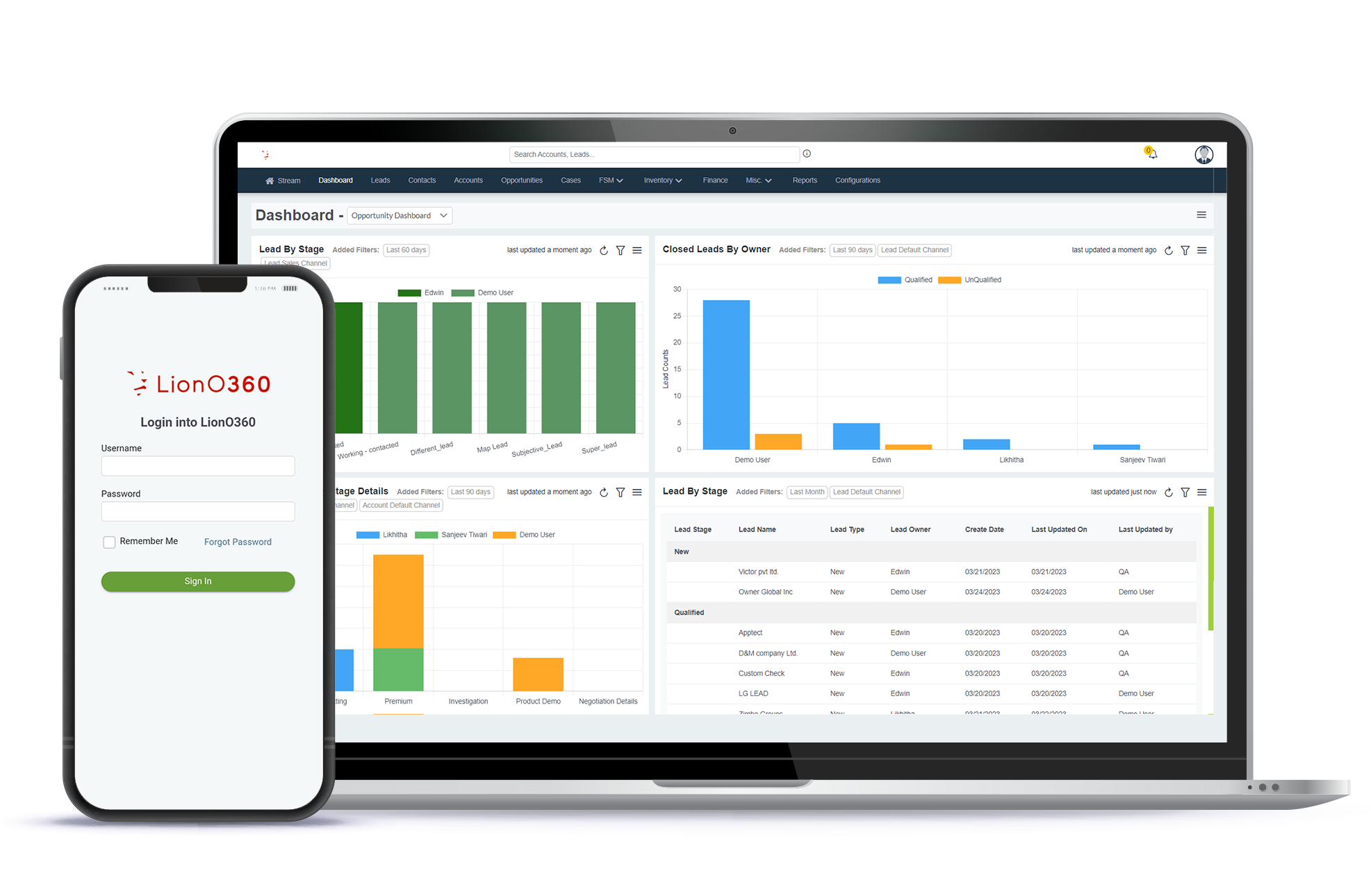
LionOBytes offers Liono360 CRM, which brings powerful lead management features into a complete CRM platform. This means businesses do not need separate tools for leads and customers. Everything works from one system.
Lead Management Features in LionO360 CRM
Centralized Lead Capture
Liono360 CRM collects leads from different channels and stores them in a single dashboard. Sales teams get a clear view of all incoming leads, making it easier to respond quickly and stay organized.
Smart Lead Scoring
Not all leads have the same level of interest. LionO360 CRM uses lead scoring to enable sales teams to identify which leads have a higher chance of conversion. This enables teams to concentrate their efforts where it counts the most.
Complete Lead Tracking
Sales teams can track every lead through different stages of the sales process. From first contact to final conversion, everything is visible, reducing the chances of missed follow-ups or lost opportunities.
Automation and Workflow Support
Manual follow-ups slow down sales. LionO360 CRM lead management helps automate tasks such as reminders, special messages, and follow-up actions. This keeps the sales process moving without unnecessary manual work.
Clean and Reliable Data
CRM helps maintain clean data by identifying duplicate records and highlighting missing information. Clean data improves reporting and decision-making across the organization.
Benefits of CRM after Conversion of Leads
After a lead is converted into a customer, LionO360 CRM helps in maintaining the relationship. Businesses can track customer history, manage ongoing communication, and better understand customer needs. This increases customer satisfaction and helps in getting repeat business.
Why Choosing the Right System Matters
Using only a lead management system may help you close deals, but it does not support long-term customer engagement. Using a basic CRM without robust lead management can lead to missed sales opportunities.
A system like Liono360 CRM, which combines both, helps businesses grow sustainably.
Ready to Manage Leads and Customers the Smart Way?
If your business is struggling with missed follow-ups, scattered lead data, or unclear sales tracking, it is time to rethink your approach. Managing leads alone is not enough; managing customers without proper lead tracking can slow growth.
With Liono360 lead management CRM, you do not have to choose between a Lead Management System and a CRM. You get a single platform that helps you capture leads, convert them faster, and build long-term customer relationships, all in one place.
Whether you are a small business or a growing enterprise, LionO360 CRM helps your sales team stay organized, focused, and productive.
Start managing your leads and customers better with LionO360 CRM.
Visit LionOBytes to learn more or request a demo today.
Frequently Asked Questions
1. Is a Lead Management System the same as a CRM?
No. A Lead Management System focuses mainly on handling and converting leads before a sale. A CRM goes beyond that and helps manage leads, customers, and long-term relationships in one place.
2. Do small businesses really need a CRM?
Yes. Even small businesses can lose leads and forget follow-ups. A CRM like LionO360 helps stay organized from day one and makes growth easier as the business expands.
3. Can LionO360 CRM replace separate lead management tools?
Yes. LionO360 CRM already includes strong lead management features, so you don’t need separate tools for leads and customer management.